


The ADKAR Model is a goal-oriented tool that aids organisations in comprehending and managing change at an individual level. Prosci, a pioneer in change management research, promoted it, and Jeff Hiatt was its creator. Awareness, Desire, Knowledge, Ability, and Reinforcement are the five linear steps or outcomes that must be accomplished for change to be successful.
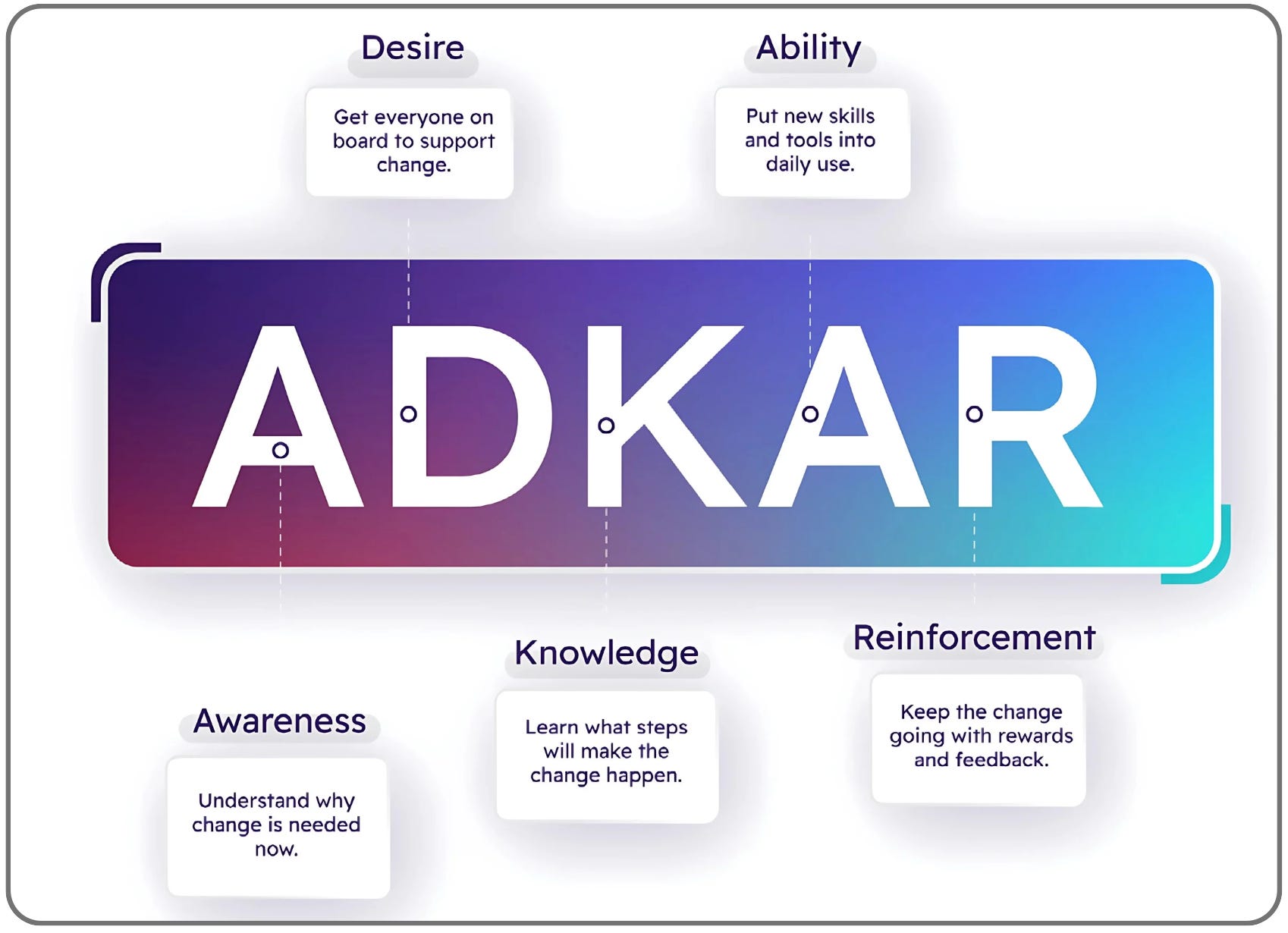
Awareness
This initial stage focuses on realising the need for change. The motivation behind the change must be communicated to stakeholders and employees. It could result from internal inefficiencies, changes in the external market, or several other factors. Everyone must, however, understand the factors that led to the transformation.
Desire
People must have a personal desire to support and participate in the change once they know its need. This phase entails developing a positive outlook on the transformation, motivated by individual motivation or rewards. It’s where organisational and emotional buy-in happen.
Knowledge
People must understand the necessity to change, even if they know the need for it and want to support it. Training and education are part of this phase. It entails describing the change’s appearance, the procedures involved, and the precise function that each individual will do.
Ability
Knowledge is abstract, whereas Ability is real world. Employees must be prepared to change their daily operations; more than simply knowing what must be done is required. This can entail developing new skills, acquiring new tools, or just practising what they’ve learned.
Reinforcement
Change might encounter opposition or reversal, particularly when it’s significant or challenging. The phase of support makes sure the change lasts over time. This may entail reward systems, feedback mechanisms, or continual training to maintain the change and avoid reverting to previous patterns.
The ADKAR Model’s emphasis on individuals is one of its most robust features. It acknowledges that for organisational change to be successful, every one of the relevant parties must move through each of these stages. It sets the stage for smoother, more efficient organisational transitions by addressing change at the individual level.