

The Bridges’ Transition Model, a groundbreaking framework developed by esteemed change consultant William Bridges, is derived from his renowned publication “Managing Transitions” in 1991. This model strategically prioritises the intricate process of adapting to change, surpassing the mere focus on the change itself. Transition is a fundamental cognitive process that individuals undergo as they acclimate to a novel environment, and this theory is predicated upon this verifiable reality. In brief, transition entails a systematic progression, whereas change can occur expeditiously.
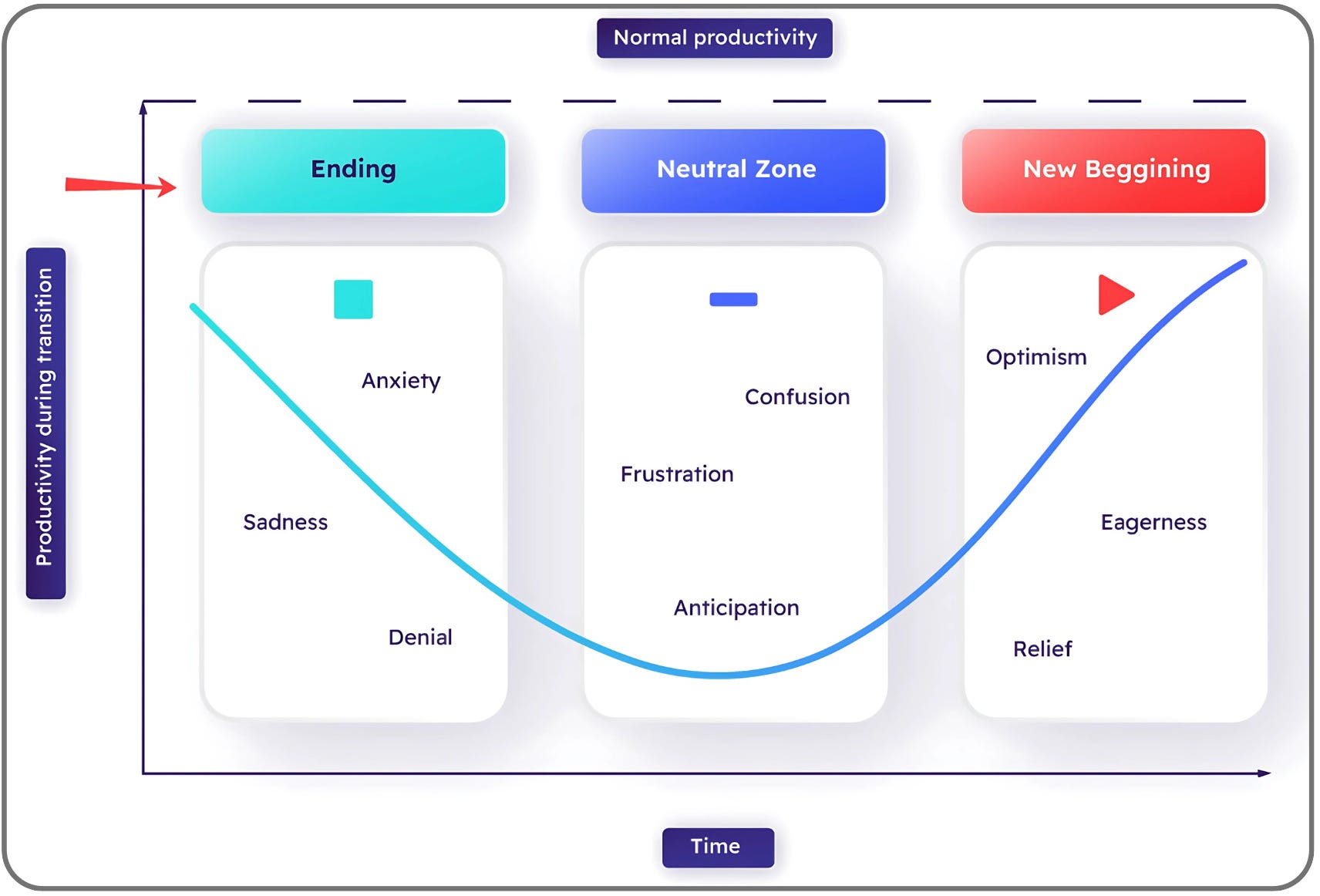
There are three stages of change highlighted in Bridges.
Ending, Losing, and Letting Go
To go on to new beginnings, people must first come to grips with the endings of their previous lives. In this step, one comes to terms with the fact that change is imminent and prepares to abandon the past. It’s an awkward time of grief and doubt. In this phase, people process the effects of the shift and experience a range of emotions, including shock, disbelief, rage, and depression. Leaders must recognise and validate these emotions and offer comfort at this time.
The Neutral Zone
This is the transition zone between the old and the new, a type of no-man’s land where the old ways are no longer useful, but the new ones haven’t quite taken hold. It’s a moment of uncertainty, adventure, and originality. It’s possible that people will feel aimless or confused about their place in society.
As the old ways of doing things are abandoned, new ways of thinking and doing things can emerge during this time.
The New Beginning
At this point, people begin to forge a new identity and find a new sense of drive and meaning in their lives. It involves accepting the current situation and making a decision to proceed. One way to assist people adjust to a new beginning is to provide them with clear communication about the new direction, to celebrate modest accomplishments, and to reinforce how changes correspond with the greater picture.
In essence, the emphasis on the individual’s subjective experience of transformation is what distinguishes Bridges’ concept. It acts as a reminder to leaders that any change will only be successful if they can pay attention to the people engaged in the process and give them the time, space, and resources they need to adapt to the new environment.