
BURKE-LITWIN CHANGE MODEL
A Comprehensive Approach to Organisational Performance and Transformation

Developed by W. Warner Burke and George H. Litwin in the 1990s, the Burke-Litwin Change Model provides a comprehensive framework for understanding the different factors that influence organisational change and performance.
This model is particularly noted for distinguishing between transformational and transactional organisational dynamics and for showcasing how these components interrelate.
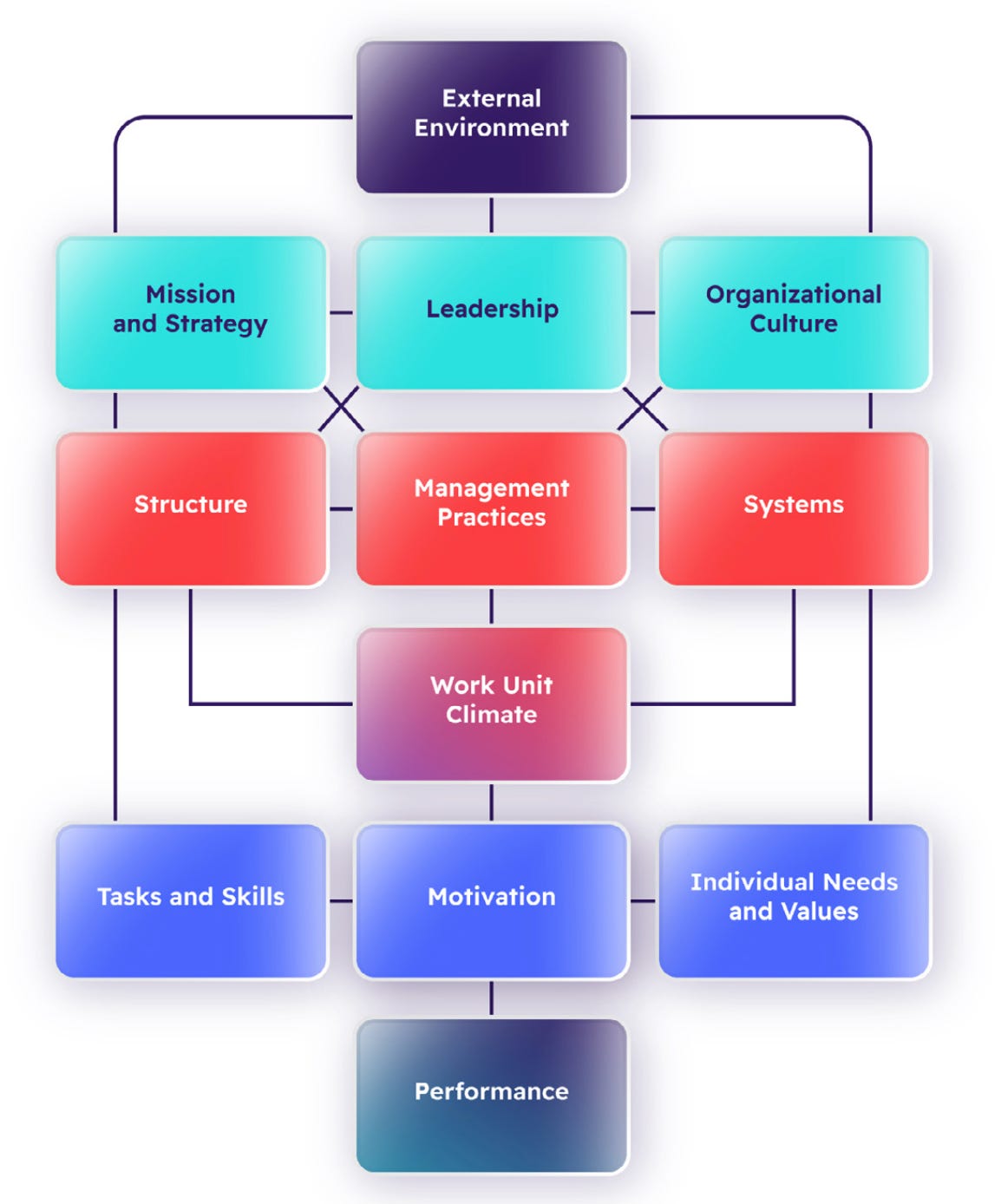
The model identifies 12 organisational dimensions grouped into transformational and transactional factors:
TRANSFORMATIONAL FACTORS:
1. External Environment: All the factors outside the organisation that have the potential to affect it.
2. Mission and Strategy: The organisation’s core purpose and the tactics it uses to achieve its goals.
3. Leadership: The behaviour and style of leaders, especially top management, and its impact on the organisational climate.
4. Organizational Culture: The shared values, beliefs, and assumptions that guide behaviour within the organisation.
TRANSACTIONAL FACTORS:
5. Structure: The organisational hierarchy, role definitions, and the way departments and teams are set up.
6. Management Practices: The systems and methods used by managers to get things done.
7. Systems: The organisation’s procedures, workflow processes, and communication methods.
8. Work Unit Climate: The collective mood, feelings, and attitudes of teams and departments within the organisation.
9. Tasks and Skills: The nature of jobs in the organisation and the competencies required to perform them.
10. Individual Needs and Values: The motivations, satisfaction levels, and personal values of employees.
11. Motivation: The individual and collective drive to achieve the organisation’s objectives.
12. Performance: The output and achievements of the organisation and its individuals.
The Burke-Litwin model suggests that transformational factors, given their broader scope, have a more profound impact on the organization’s climate, which in turn affects the transactional factors. However, both sets of factors are interrelated and play critical roles in determining organisational performance.
For leaders and change managers, the model serves as a roadmap for diagnosing the current state of an organisation and understanding where interventions might be needed. By pinpointing which factors are misaligned or underperforming, targeted strategies can be deployed to drive effective and sustainable change.