
CHANGE MANAGEMENT AS A PROCESS
A step-by-step journey from vision to sustainability, ensuring each change becomes firmly embedded in your organisation

Adapting to the ever-changing demands of the modern business world requires a firm’s leadership to make change management a top priority. Simply said, change management is a methodical plan for bringing about the desired transformation in an organisation’s culture, working practices, and relationships with its constituents. By dissecting it into its fundamental steps, this process can be made more transparent.
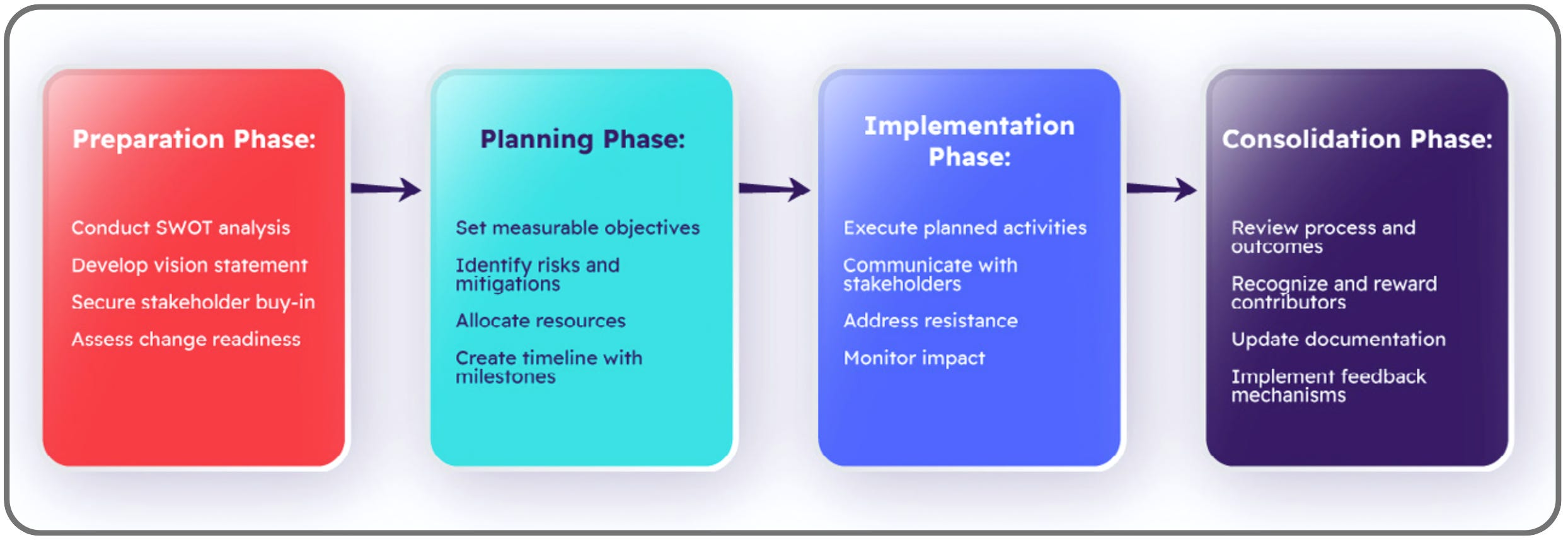
PREPARATION PHASE:
Rationale: Before initiating any change, it is essential to understand the need for it and gauge the organisation’s readiness. The preparation phase involves recognizing the change and rallying the stakeholders around the vision.
Key Activities:
Conduct a SWOT (Strengths, Weaknesses, Opportunities, Threats) analysis to identify the areas needing change.
Develop a clear vision or statement that explains the need for the change.
Engage key stakeholders to secure buy-in. This may include top management, influencers within the organisation, and any other vital personnel.
Gauge the organisation’s overall change readiness through surveys, interviews, or workshops.
PLANNING PHASE:
Rationale: Once there is clarity on the need for change, the next step is to devise a roadmap. The planning phase lays down the blueprint detailing how the change will be executed.
Key Activities:
Set clear, measurable objectives that the change aims to achieve.
Identify potential risks or barriers to the change and outline strategies to mitigate them.
Allocate resources (both human and capital) necessary for the change.
Create a detailed timeline with milestones and deliverables.
IMPLEMENTATION PHASE:
Rationale: With a plan in place, it’s time to set the wheels in motion. The implementation phase is the crux where strategies turn into actions.
Key Activities:
Execute the planned activities, keeping a close watch on the timeline.
Continuously communicate with stakeholders, updating them about the progress and any alterations to the plan.
Address any resistance immediately, using feedback constructively to refine the approach.
Monitor the change’s impact, checking for alignment with the set objectives.
CONSOLIDATION PHASE:
Rationale: The culmination of the change management process is not just about reaching the end goal but also ensuring the change is sustainable. The consolidation phase solidifies the change, integrating it into the fabric of the organisation.
Key Activities:
Review the entire change process, identifying successes, learnings, and areas of improvement.
Recognise and reward teams and individuals who played pivotal roles in the change.
Ensure all documentation is updated to reflect the new processes, roles, or strategies.
Implement feedback mechanisms like surveys or focus groups to continuously gauge the change’s effectiveness and adjust as needed.
In conclusion, change management is a cyclical process. Even after consolidation, organisations must remain vigilant, ensuring the change sticks while also being prepared for subsequent changes in the future. Embracing this structured approach can greatly enhance the chances of change success, positioning the organisation favourably in its growth journey.