


The Kübler-Ross Change Curve, originally conceptualised by Elisabeth Kübler-Ross in her 1969 book “On Death and Dying,” was designed to explain the stages of grief experienced by terminally ill patients. However, over time, its applicability has been expanded to various areas, notably in the business and organisational sectors, to describe the stages individuals typically go through when faced with significant change or disruption.
The model outlines six stages:
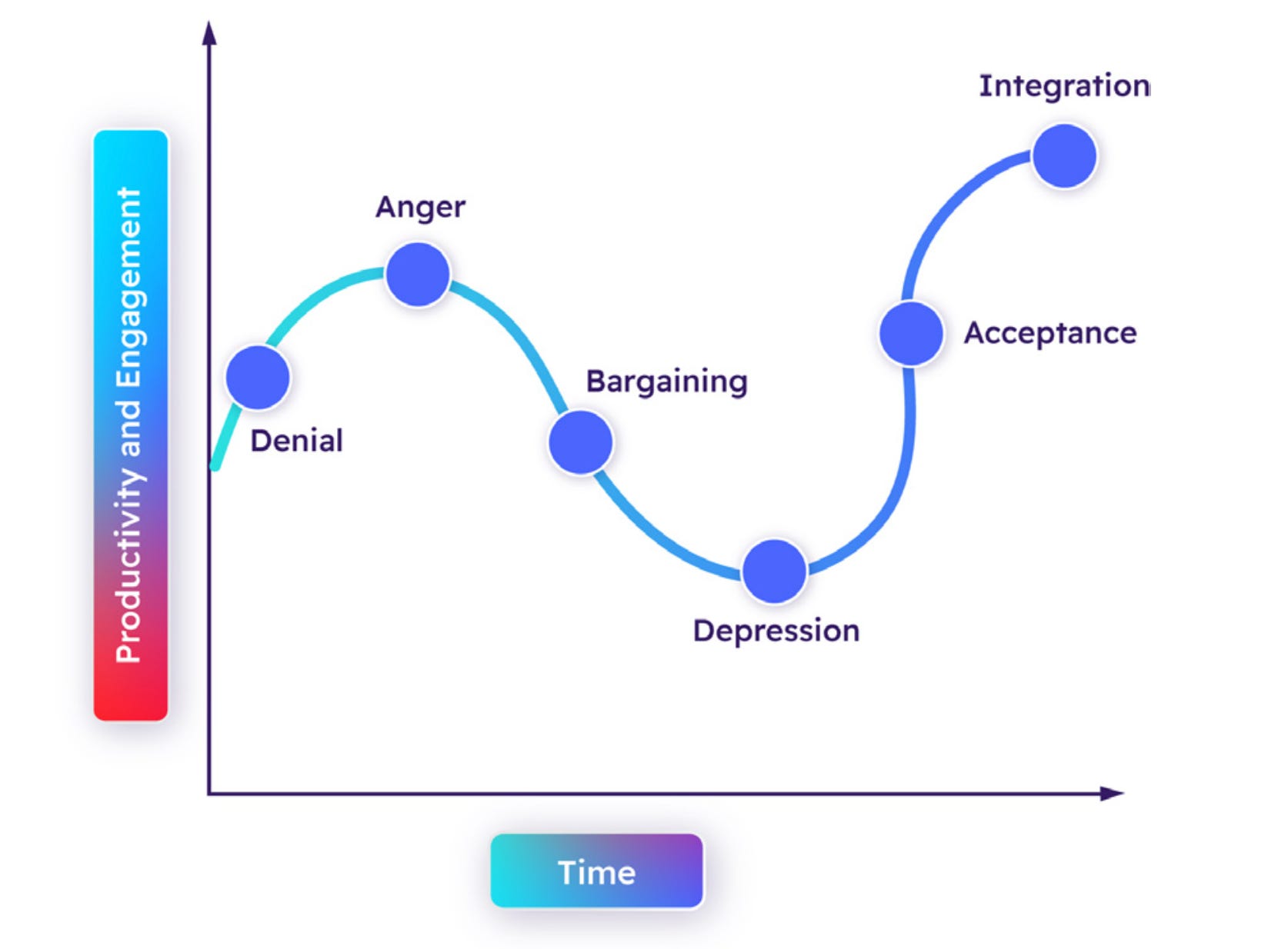
Denial
When confronted with change, the initial reaction for many is denial. In this phase, individuals might believe the change is temporary or perhaps not as severe as presented. This is a defense mechanism that buffers the immediate shock of the change.
Anger
As the reality of the situation starts to sink in and denial becomes untenable, anger often emerges. Individuals might resent the change or feel that they’ve been treated unfairly. This can manifest as frustration, irritation, or even full-blown outbursts.
Bargaining
During this phase, individuals might try to negotiate or bargain to avoid or mitigate the change. It’s a vain hope for a return to the previous state or to find a middle ground.
Depression
Recognising that bargaining won’t alter the situation, individuals often become despondent, disheartened, and fearful of the upcoming changes. This phase is marked by retreat, inactivity, or even feelings of helplessness.
Acceptance
As the reality of the change and its inevitability become clear, individuals reach a point of acceptance. While they might not necessarily embrace the change, they come to terms with it. It’s in this phase that exploration and experimentation begin, leading to finding ways to work with or adapt to the new reality.
Integration
In this phase, individuals have not just accepted the change; they have made it part of their daily routine or work processes. They leverage the change as a tool or strategy for their goals, effectively translating their acceptance into action. This is where true organisational transformation occurs, as employees become champions of change rather than passive recipients.
For business leaders and change managers, understanding the Kübler-Ross Change Curve is vital. It offers insights into the emotional journey employees undergo during periods of upheaval. By recognising these stages, organisations can better support their staff, providing the necessary resources, communications, and empathy to aid in navigating the often-challenging waters of change.